Security you can hand to an auditor.
Every DocHubX control is designed to be demonstrated, not just described. Here's exactly how your financial records are protected — and how you prove it.
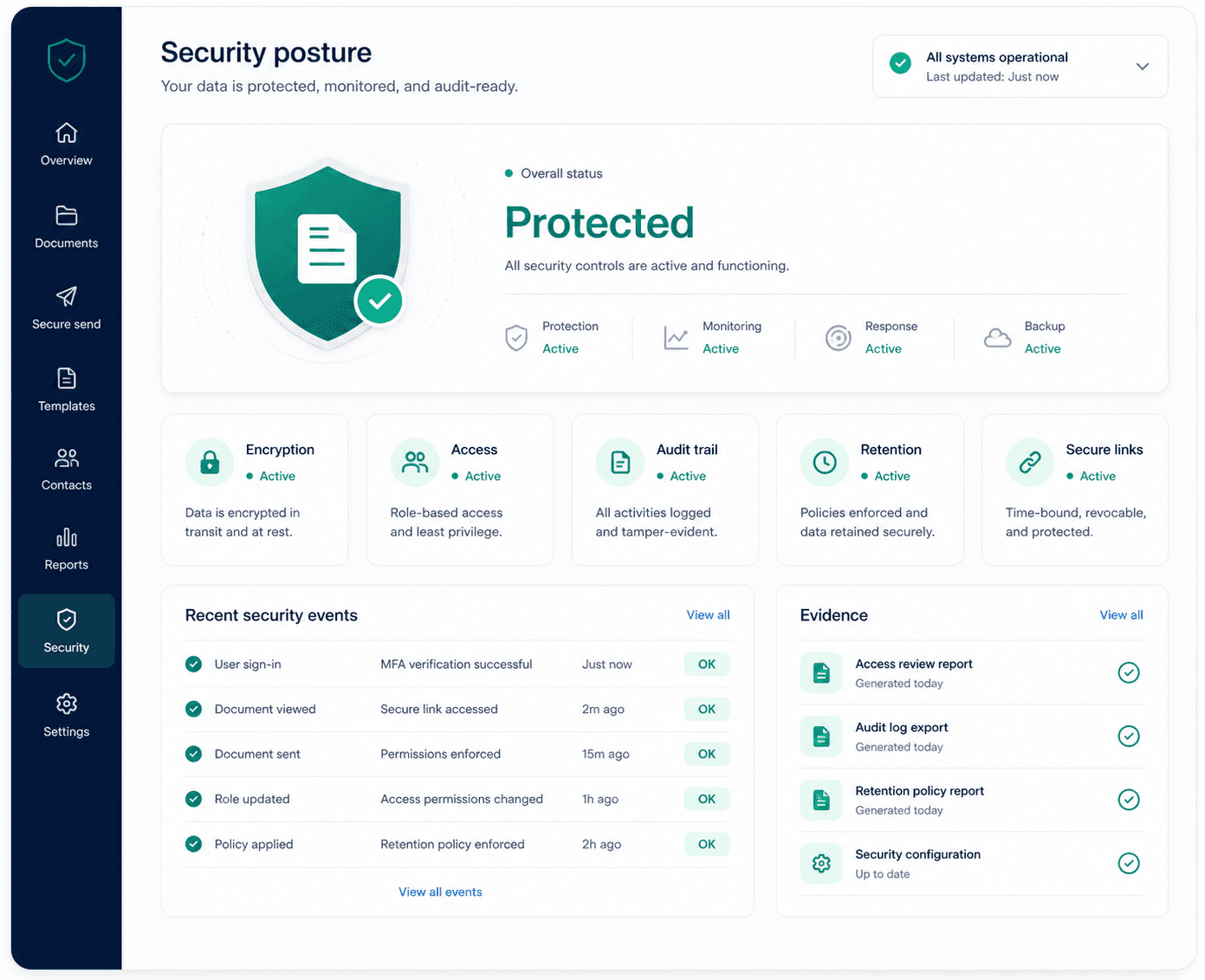
Encryption & data protection
- 256-bit SSL/TLS in transit and at rest
- Document watermarking
- Secure links with expiration and custom session timeouts
- Automatic file deletion policies
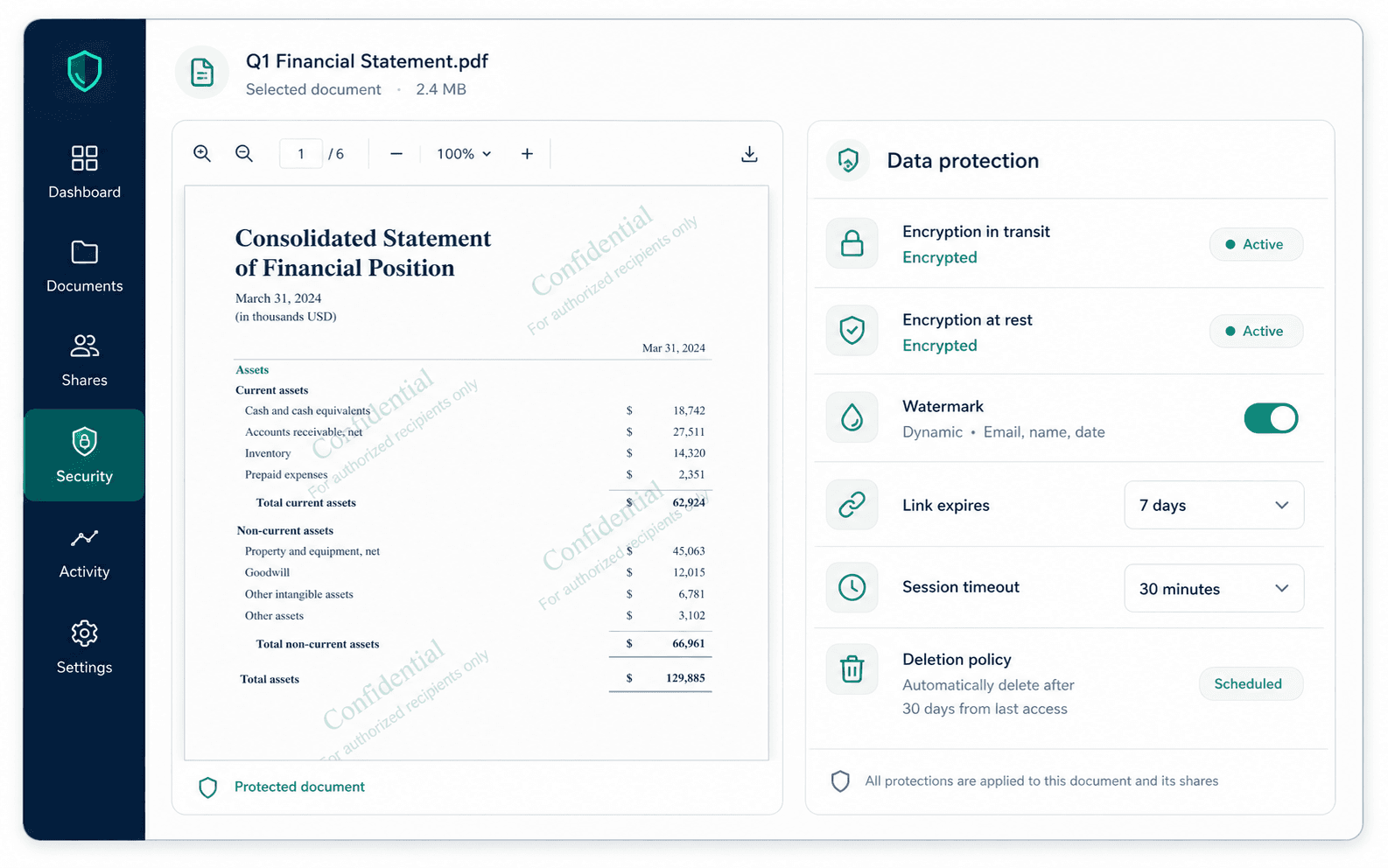
Access control
- Role-based permissions (view / edit / admin)
- Folder-level access
- Stealth mode (users can't see each other)
- Instant, logged revocation
- NDA gates before entry
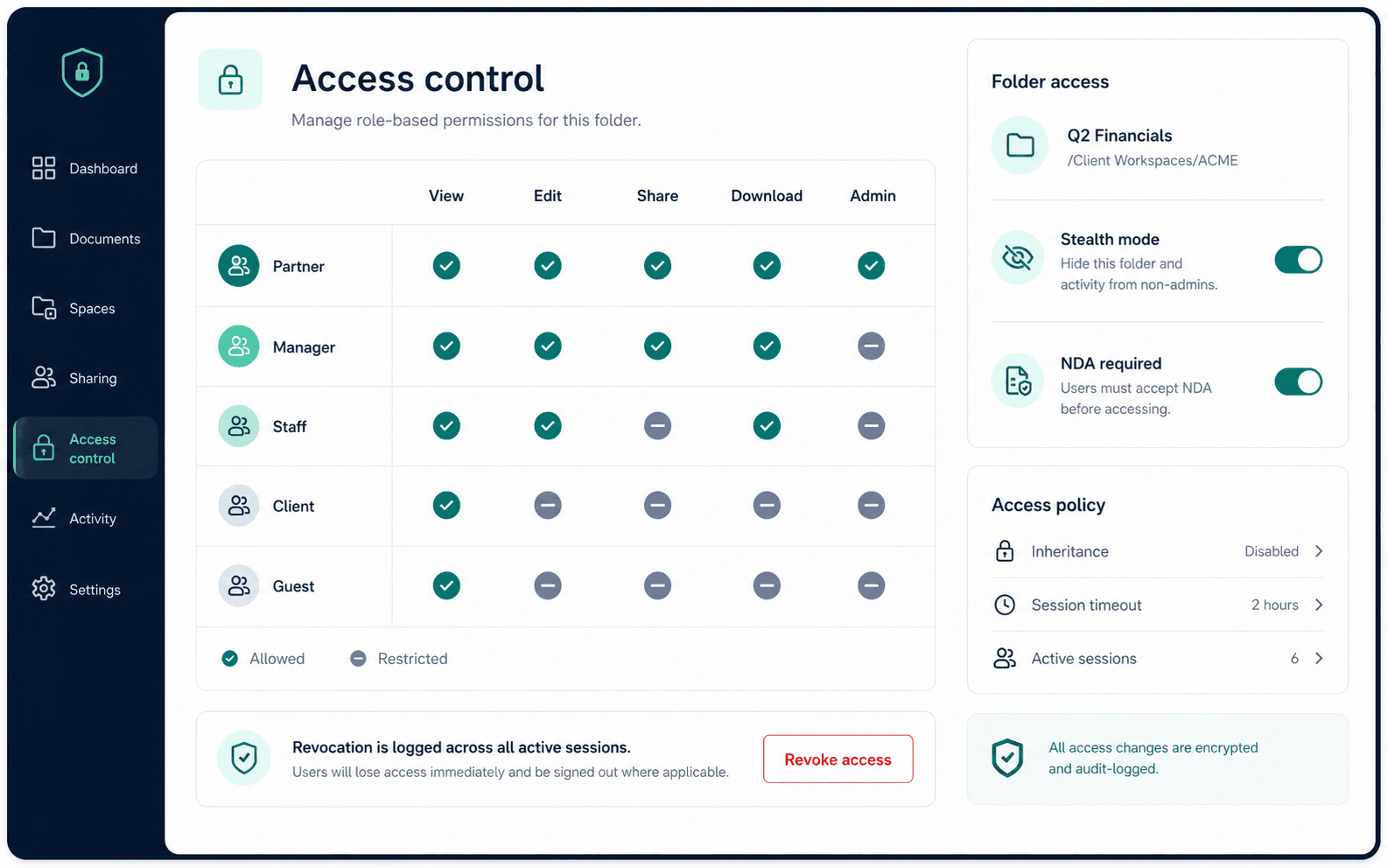
Audit & accountability
- Full audit trails of every action
- Real-time alerts on views/downloads
- Exportable activity reports for any date range
- Version history with clear version numbering
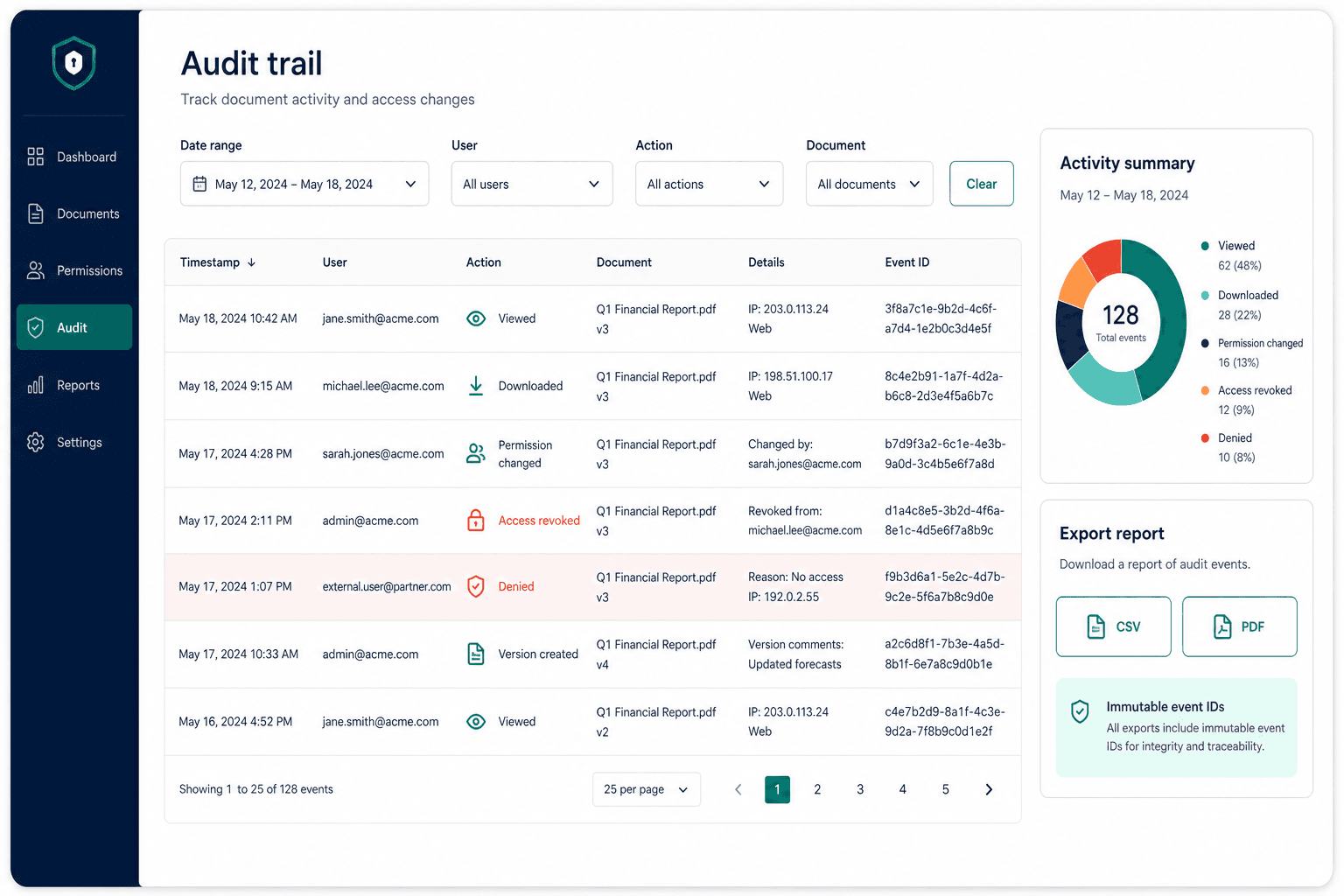
Compliance posture
DocHubX is built around the standards financial firms answer to — including SOC 2 and GDPR — and the record-retention obligations that come with handling client financial data. We state only what is genuinely true and certified; we do not claim certifications DocHubX does not hold.
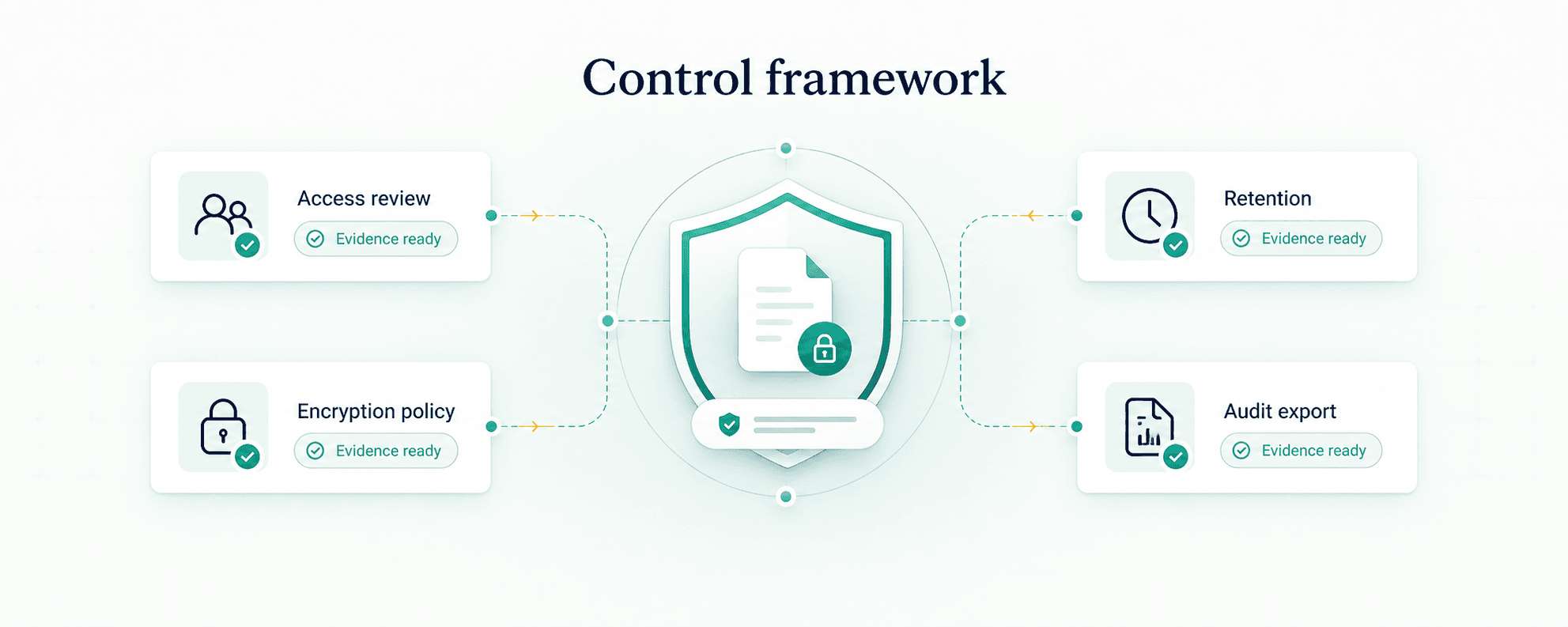
How you prove it.
| When you're asked… | DocHubX gives you… |
|---|---|
| Who accessed this file? | A timestamped, exportable log. |
| Can you show me every download in the last quarter? | A filtered activity report, ready in seconds. |
| How do you know a departed employee can't get back in? | Instant, logged revocation across every device and session. |
| What happens if a shared link leaks? | Expiring links, watermarks, and session timeouts limit the blast radius. |
| Can a guest see who else has access? | Stealth mode keeps participants invisible to one another. |
| How do you prove nothing was altered? | Version history with clear, immutable version numbering. |
Security, answered plainly.
Financial records are stored in encrypted form across redundant, access-controlled infrastructure. Data residency options are available for firms with regional requirements — talk to your account team.
Yes. Administrators can configure automatic file deletion and retention windows per workspace or folder to match your firm's record-keeping obligations.
Revoking access is a single action that immediately invalidates a user's permissions across every device, session, and shared link — and the revocation itself is written to the audit trail.
Yes. Every guest interaction — views, downloads, NDA acceptance — is logged with the same detail as internal user activity.
The activity history is preserved independently of the file itself, so a deleted document's access history remains available for audit and reporting purposes.
SSO is available on our Enterprise plan, alongside custom retention policies and dedicated support.
Yes. Watermarks can include the viewer's name, email, and timestamp, making leaked copies traceable to the individual session that produced them.